After-hours office cleaning: what a facilities manager should actually inspect
A foyer walk at 8am is not an inspection. This is a practical route through kitchens, washrooms, glass, bins, high dust, security and the conversation you should have with the night supervisor.
By Claire Nguyen · Facilities editor · 4 February 2025 · Updated 20 January 2026
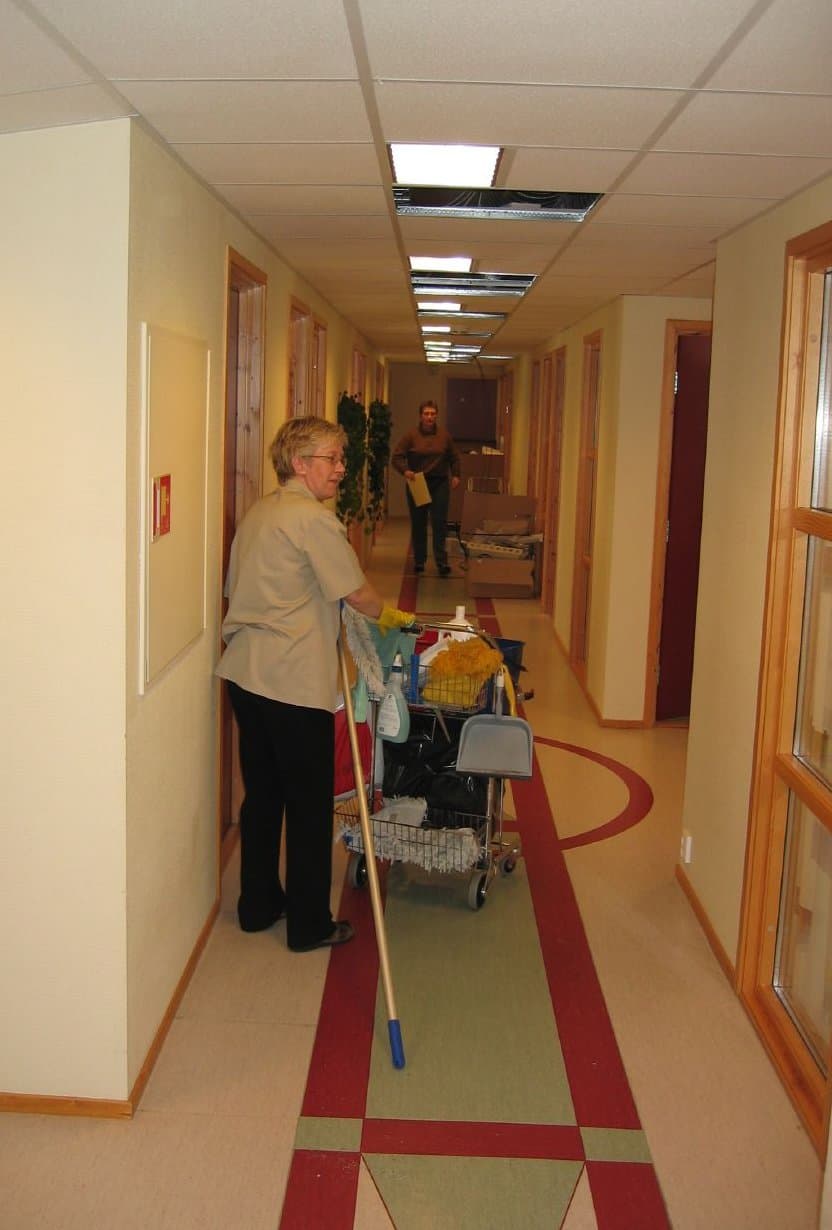
Most facilities managers inspect the wrong building. They walk in at 8:10am through a foyer a day porter has already reset, glance at the stone, and decide the contract is “pretty good”. They do not open the microwave. They do not look at the underside of a washroom dispenser. They do not speak to the night supervisor, because the night supervisor left at 5:30am and nobody has ever put a name to the shift.
An after-hours inspection is a different job. It is done in the hours the work is performed, or in the first minutes of the business day before the occupier rewrites the evidence. It follows a route, not a vibe. It produces a record the contractor can answer. And it treats the foyer as one room among many.
If you want a document the crew can be held to, start with writing a commercial cleaning specification. If you only want to know what to look at on Thursday night, stay here.
When to walk
There are three useful windows.
During the night attend, after the crew has finished a floor and before they leave it. You see method: colour-coded cloths, whether vacuum bags are being changed, whether a “clean” tea point still has a full dishwasher. You also see blockers — a meeting that ran until 9:40pm, a locked store, a card that does not open the end-of-trip. Ask what stopped the work. Do not hold a disciplinary interview in a corridor at 11pm.
At the end of the night, after the building is set or as close as the alarm allows. This is the best window for presentation: bins, chairs, glass, washrooms. It is a poor window for high dust, which you cannot see well under after-hours lighting.
In the first twenty minutes of the business day, before the tea point is used and before the day porter “just tidies the front”. This is the occupier’s reality. Glass fails here that passed at 10pm. If you only ever inspect in this window you will blame the night crew for day-time soil. If you never inspect in this window you will miss what tenants see.
Put the window in the diary and in the specification. A contractor who is only ever walked on a pre-arranged quarterly tour will present that tour.
Do not start in the foyer
Start at the back of the floor and walk forward. The foyer is the one room that will almost always have been done, because everyone knows you look at it. The rooms that tell you whether the specification is alive are the ones that do not face the lift.
A useful office route, adjusted for the tenancy:
- End-of-trip, showers and bike store, if the tenancy owns them
- Secondary washrooms, not the one by reception
- Tea point and any satellite kitchens
- Quiet rooms, parents’ rooms, first-aid rooms
- Open plan, including under desks and the bins people hide beside a pedestal
- Meeting rooms and the credenza nobody opens
- Reception, entrance glass and the lift lobby the tenancy controls
If you run out of time, cut reception, not the showers. The workplace hygiene hub is full of buildings that photograph well from the street and fail a Friday inspection of the microwave.
Kitchens and tea points
Open the things a shy inspector leaves shut. Microwave: door seal, roof of the cavity, plate, handle. A “wiped” microwave with a baked roof fails any outcome that mentions food residue. Fridge: obvious spills, a floor that has become a drip tray, and whether expired food is a cleaning job or an occupier job. Say which in the specification and inspect against that line.
The sink and drainer should be free of standing water and food soil. The tap base collects paste. If the crew is required to run the dishwasher, the specification should say so, and you should find it empty or running. If they are not, do not fail them for plates.
Bins need liners that fit, and they need to have been emptied. A tied liner perched on a full bin is not emptying. Bench crumbs are daily soil. High dust on the fridge top is periodic. Do not mix those two inspections and then write a vague email about “the kitchen being a bit ordinary”.
Washrooms
Split the inspection the way the work splits.
Replenishment. Soap, paper, toilet tissue, sanitary bags. Dispensers should meet the fill rule you wrote. If you wrote nothing, you will argue about “adequate”. Check that the product in the dispenser is the product you specified.
Fixtures. Basins, taps, undersides of spouts, mirrors, bowls, seats, urinals, shower trays. Hair at the drain is nightly. Scale is a maintenance conversation if the water is hard and nobody has a descaling task on the periodic sheet.
Floors and partitions. Corners, behind the door, the underside of the sanitary bin, the top of the cistern. Partition tops are high dust. If they are thick, your monthly is not happening.
Odour and waste. A washroom can look wiped and still smell. That is usually a drain, a sanitary service, or a missed bowl, not a need for more air freshener. Air freshener used as a substitute for cleaning is a finding.
Colour-coding should be visible in the caddy. If the same cloth that did the bowl is being used on the basin, you do not have a washroom program. Pair this with whatever high-touch surface protocol you claim to run: flush buttons, door plates, tap handles and sanitary-bin lids are the points people touch.
Glass, bins, furniture and high dust
Entrance glass and partition glass fail in daylight. Inspect them in the condition the specification names. Look at both sides of a door, the push plate, and the height a person looks through — not only the band a tired cleaner can reach without a pole. Interior glass that is “as required” will be done for a board visit.
Bins: empty, lined, standing in the right place. Desk bins emptied but not lined are a training issue. Recycling treated as landfill is sometimes a tenant-education issue. Do not load every contamination failure onto the night crew if the occupier has no day-time bin signs.
Chairs should match the rule you wrote. If you see a neatly coiled cable and a dead dock, ask before you praise the tidy desk. High dust is the honest periodic. Run a finger on the exit-sign ledge, the locker top, a diffuser blade you can reach safely. If you cannot reach it safely, do not invent a fail from the floor. A facilities manager standing on a visitor chair is not an inspection method.
Security, alarms and photo evidence
After-hours work sits inside a security system that was not designed around a mop. Can the crew get into every in-scope room? A repeated fail in a locked partners’ kitchen is an access issue. If the cleaner is expected to make a floor alarm-ready, that is a security task and should be trained as one.
Cards expire. Relief staff inherit cards that still open last year’s tenancy. PIN codes get written on the inside of a cupboard. These are WHS and security findings. They belong on the same report as the microwave, because they decide whether the microwave will ever be done.
Do not ask a cleaner to disable a detector, prop a fire door, or remain after the agreed egress time so you can finish a tour. Model WHS duties on a person conducting a business or undertaking do not pause for a quality walk.
A useful photo has a room, a surface and a date. Stand close enough that the soil is visible and far enough that the room is identifiable. Do not photograph people without a reason the privacy policy supports. Do not photograph screens. Do not use photos as a humiliation file. Write the finding in the specification’s language. “Tea point microwave, L14, roof cavity with baked residue, nightly food-equipment task” can be answered. “Kitchen not up to scratch” cannot. That is the same inspectable-sentence rule as our editorial standards.
Talking to the night supervisor
The night supervisor is the only person who knows why the boardroom was skipped. Meet them on their time. Learn their name. Ask how many bodies were actually on the floor, not how many the roster promised. Ask what they would cut if they had to cut — you will learn what the price is really buying.
Bring the specification, not a mood. Walk two or three rooms together. Agree what a fail is while you are both looking at the same sink. If they tell you the store has had no hot water for a fortnight, believe them until the building proves otherwise.
If the supervisor’s English is limited, do not perform the conversation at speed in a stairwell. Use the same short sentences you should have put in the specification. Point at the surface. Write the action. If the contractor cannot field a supervisor who can take a finding, that is a contract-management finding, not a reason to shout at the person holding the mop.
Fatigue is part of this conversation. A crew that started a school at 4pm and your office at 9pm will inspect differently from a dedicated attend. That is not an excuse for a dirty washroom. It is context for whether you are buying a slice of a run. We write about the safety side in night-shift cleaning, fatigue and safety.
A monthly deep dive on one floor, a weekly ten-minute route on another, and a quarterly walk with the area manager is enough for most tenancies. Daily foyer glances train everyone to treat the rest as optional. Record closes, not only fails. If the same three rooms fail for three months, open the specification, the access list or the labour hours — not a sterner adjective. The foyer will still look fine. That was never the question.
Questions readers send us
- Should I inspect with the contractor or on my own?
- Do both, on a rhythm. A solo walk finds what a hosted tour will steer you past. A walk with the night supervisor is how you find out why a room failed — no key, no hot water, a locked store, a late function. Write the fail either way. Listen to the reason before you escalate.
- How many photos are too many?
- Enough to identify the room, the surface and the date, and not so many that nobody reads the file. One clear frame of a failed microwave is better than twelve artistic shots of a bin. If you cannot say what the photo proves, do not take it.
- Is a daylight inspection unfair on a night crew?
- Daylight is harsher on glass and dust, and that is the condition staff will see. It is fair if the specification says so. It is ambush if you have only ever inspected at 9pm under downlights and then fail the entrance glass at 8:15am in a northerly glare.
Continue in Workplace hygiene
Indoor air quality is a cleaning job, not only an HVAC job
Dust reservoirs, vacuum filtration, chemical volatiles and damp after mopping sit on the cleaning side of a building. Plants will not save a tenancy that soils itself every night.
Claire Nguyen · 6 May 2025
The real cost of tired carpet in a commercial tenancy
Appearance is a lagging indicator. Vacuum frequency, soil load, interim and restorative cleaning, AS/NZS 3733 and lease make-good decide whether a floor is maintained or quietly written off.
Claire Nguyen · 8 April 2025
High-touch surface protocols that survive a real Australian workplace
Lifts, door furniture, meeting rooms and shared keyboards need a protocol people will still follow on a wet Wednesday, not a laminated leftover from 2021. Dwell times, colour-coding and the limits of an alcohol wipe.
Claire Nguyen · 11 March 2025