High-touch surface protocols that survive a real Australian workplace
Lifts, door furniture, meeting rooms and shared keyboards need a protocol people will still follow on a wet Wednesday, not a laminated leftover from 2021. Dwell times, colour-coding and the limits of an alcohol wipe.
By Claire Nguyen · Facilities editor · 11 March 2025 · Updated 2 February 2026
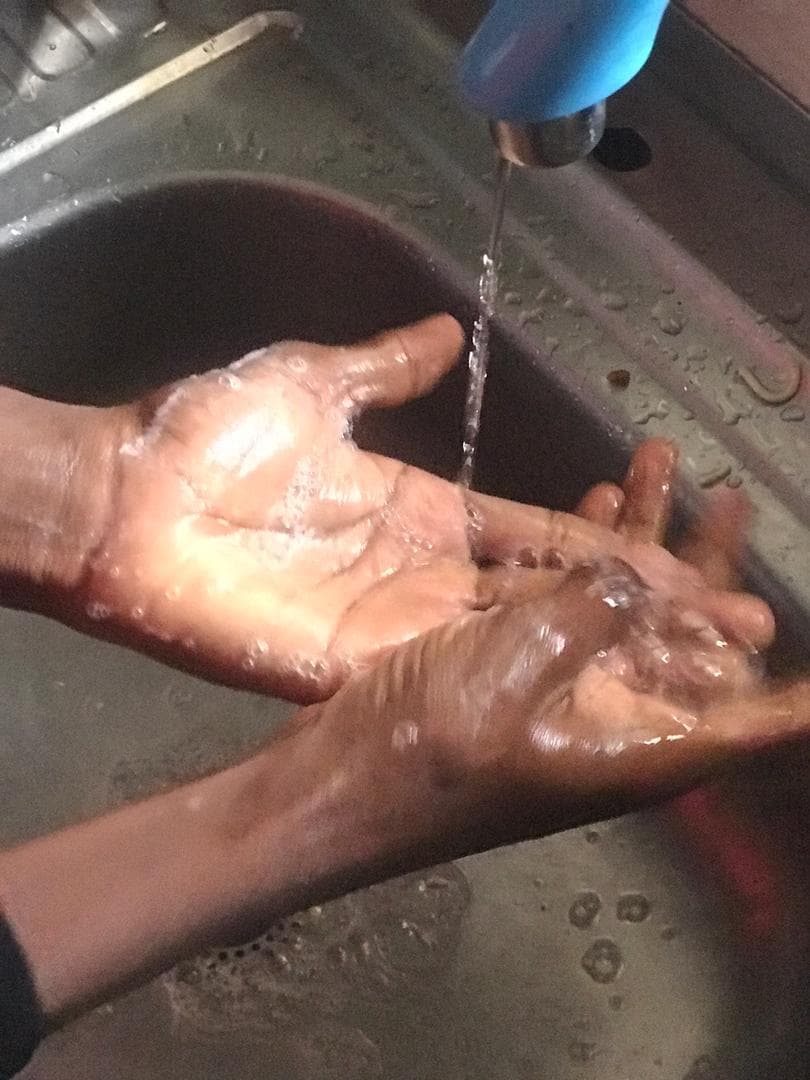
High-touch protocols have a half-life. They are written after an outbreak, laminated, photographed for a tender, and then quietly abandoned when the day porter is covering two buildings and the night crew has forty minutes on the floor. What remains is usually a tub of alcohol wipes on a reception desk and a belief that “we sanitise”. The wipes dry out. The list is still the 2021 list, including things nobody has touched since the reception phone was replaced by a headset.
A protocol that survives a real Australian workplace is shorter than that list, honest about dwell times, and owned by people on site when the surfaces are used. A small number of surfaces, a method that matches the soil, a frequency the roster can carry in August.
This sits in the workplace hygiene hub because it is practice, not theatre. When a cluster arrives, the same surfaces turn up in infection control after a workplace outbreak. A protocol you already follow is available on the Tuesday. A protocol you only have as a PDF is not.
What “high-touch” means on an office floor
It means a surface many hands hit in a day, not a surface that looks important. In a typical multi-storey tenancy the honest list is boring:
- Lift call buttons and, inside the car, the panel and the handrail
- Door handles, push plates, and the glass next to a handle that people actually push
- Washroom taps, flush buttons, dispenser levers, door locks and sanitary-bin lids
- Tea-point taps, fridge, dishwasher and microwave handles, and the kettle or boiler lever
- Meeting-room table edges, chair arms, presentation remotes, and the room-booking panel
- Shared keyboards, pointer devices, and the edge of a hot-desk monitor
- Stair handrails if people use the stairs, which in a fire-stair-only building they mostly do not
That is already more than a night crew can do properly if you also want floors, bins and washrooms. A protocol that names forty items will deliver six, chosen by whoever is tired. A protocol that names twelve, split between day and night, has a chance.
Do not put “all light switches” on the night list in a tenancy with motion sensors, or “all keyboards” if the occupier has not agreed a cleaner may touch them. Seriousness is subtraction.
Lifts, doors, meeting rooms and keyboards
Lifts are often a base-building problem that tenancy managers still get asked about. Buttons are the definition of high-touch. If the building has a day porter, the lift panel belongs on their loop, not only on a 10pm attend after the peak. In a multi-tenant tower the base-building cleaner usually owns the cars and lobby buttons. The tenancy cleaner owns the tenancy side of the floor door. Write it down. Inspect the join.
Door furniture includes the plate people push instead of the handle. Glass around a handle collects the same hand soil and shows it. If you specify smear-free glass, you have already specified a high-touch wipe of that band.
Meeting rooms turn over during the day. An after-hours clean will always be a session behind. If you have no day presence, you will not have a daytime protocol. Stop writing one. Shared food in a meeting room is soil. Crumbs need detergent. A scented wipe over a crumb is how you get a sticky table that still smells of citrus. The same rule applies as in food premises wash-up: visible food soil comes off with surfactant and mechanical action. The disinfectant conversation happens after that, if it happens at all.
Hot-desking made shared keyboards worse, then hybrid work made it uneven. A shared keyboard is a high-touch object. It is also an asset IT may not want wetted. A protocol that says “sanitise all keyboards nightly” without an IT method and occupier sign-off will be ignored by any cleaner who has already been shouted at for unplugging a dock.
If you want it done, specify the method: powered down or locked, approved wipes, no liquid into the keys, a cloth that is damp and not wet. Saying users wipe their own keyboard with a supplied tub is often more honest. Personal headsets and laptop keyboards are user equipment. Putting them on a cleaning scope is how you get breakage claims.
Dwell times versus wipe-and-go
This is where leftover SOPs become fiction. Many hospital-grade and commercial disinfectants only do what the label claims if the surface stays wet for a stated number of minutes. The label is the condition of use, and it sits with the safety data sheet under Australia’s hazardous chemical rules.
A night cleaner with forty minutes on a floor cannot wet forty door handles for ten minutes each. A day porter cannot dwell a lift button without holding the car out of service. So one of three things happens:
- The product is used as a wipe-and-go. You have bought a detergent wipe with a disinfectant label.
- The crew uses a product that is intended as a clean-as-you-go wipe, and the protocol stops pretending it is a hospital cycle.
- A small number of surfaces — a washroom basin, a known vomit incident, a meeting table after a gastro risk — get a true dwell, and the rest get cleaned.
The third option survives. Name the product, the wet minutes, and the surfaces that actually get them. For the rest, write “damp-wipe with detergent” or “use the specified wipe, no dwell claimed”. Precision is how you avoid telling a board that you “disinfect the building nightly” when you do no such thing.
Alcohol wipes have a narrower honest use than their presence on reception desks suggests. They can reduce microbial load on a hard, non-porous surface that is already physically clean. They are weak against visible soil. They are a poor choice on a tea-point bench with food fat on it. They evaporate, which is why the tub at reception is often a tub of dry cloths. They are also a poor match for some viruses of gastrointestinal concern. If your protocol is a wipe tub and a hope, you have a hospitality gesture, not an infection-control method.
Colour-coding that is still true at 11pm
Colour-coding is custom, not an Australian statute. The usual trade convention — red for washrooms, blue or yellow for general surfaces, green for food areas — exists so a cloth that did a toilet bowl does not then do a kitchen bench. It only works if cloths, buckets and gloves follow the same map, and if the relief cleaner is told the map.
A protocol that says “colour-coded cloths” and then provides a bag of white microfibre is not a protocol. Keep the map short enough to tape inside the cleaners’ store. Say where dirty cloths go. Colour-coding fails in the laundry bag as often as it fails on the trolley.
Washrooms are the test. If the washroom program and the high-touch program disagree about taps and flush buttons, the crew will pick one. Align them with the same product, cloth colour and frequency language you would use for any other washroom hygiene task.
When leftover SOPs become a WHS problem
The post-COVID folder is still in the tenancy file. It may require fogging, twice-daily wipe-downs of every switch, and a product that is no longer on the trolley. Two problems follow.
The first is commercial. You are measuring a contractor against a document nobody funds. The second is chemical. A leftover instruction to fog, or to use a stronger disinfectant “to be safe”, can put workers and occupants in contact with a hazardous chemical that is not needed for the job and is not covered by current training or the current SDS folder. Safe Work Australia’s model code on managing hazardous chemicals in the workplace is the reason the product on the trolley should match the product on the page.
If the SOP is dead, withdraw it in writing. If parts of it are still useful — a short high-touch list, a spill method, a decision tree for when to close a meeting room — lift those parts into the live specification and date them. An undated laminated page in a kitchen is how two different products get used on the same bench.
Wiping a handle does not fix a stuffy meeting room. A scented wipe can add a volatile load people then describe as “the cleaning smell”. The air conversation belongs with the building engineer, which we take up in indoor air quality and cleaning.
A protocol a roster can carry
A workable office protocol, for a tenancy with a short day presence and a night crew, looks like this.
Day loop, two or three times on a full building day: lift buttons the tenancy owns; reception door furniture; the busiest washroom taps and flush buttons; meeting rooms after use; tea-point handles if you have a kitchen attend.
Night attend: the rest of the washroom high-touch set; tea-point and appliance handles as part of the kitchen clean; meeting-room reset; tenancy door furniture; any shared keyboard work that is actually authorised.
Periodic: stair rails if used; locker banks; the backs of meeting-room chairs that only fail when you look.
Incident: a written method for vomit, diarrhoea and blood that is not “spray everything and fog”.
Name the product once. Name the dwell only where you will wait. Name the owner of the day loop, including Fridays when the porter is off. If hybrid occupancy means Tuesdays are full and Mondays are empty, the day loop follows occupancy, not the calendar.
Train it as a five-minute brief. Show the surfaces, the cloth, and what “wet for four minutes” looks like on a tap. If the crew’s first language is not English, this is a demonstration job. Our editorial standards take a dim view of infection-control claims that cannot be demonstrated on the floor. So should a facilities manager.
The test is the same as for any other cleaning document. On a wet Wednesday in July, with one person down and a late board meeting in the glass room, which surfaces will still be done? Write those. Stop laminating the rest.
Questions readers send us
- Do we still need a COVID-era high-touch list?
- You need a short list that matches how the building is used now. You do not need a 2020 poster that names every light switch in the tower. If the day porter will not do the work, and the night crew cannot reach the surface while it is in use, the list is decoration.
- Are alcohol wipes enough for kitchen benches?
- Not if there is food soil on them. Detergent and water remove the soil that a wipe will otherwise polish. Alcohol products have a place on some hard, non-porous surfaces when they are already visibly clean. They are a poor substitute for washing a tea-point bench.
- Who owns high-touch work during the day?
- Whoever the specification names. In most offices that is a combination of a day porter for lifts, washrooms and meeting rooms, and a night crew for the rest. If nobody is named, the work will be done after the first complaint and forgotten after the third quiet week.
Continue in Workplace hygiene
Indoor air quality is a cleaning job, not only an HVAC job
Dust reservoirs, vacuum filtration, chemical volatiles and damp after mopping sit on the cleaning side of a building. Plants will not save a tenancy that soils itself every night.
Claire Nguyen · 6 May 2025
The real cost of tired carpet in a commercial tenancy
Appearance is a lagging indicator. Vacuum frequency, soil load, interim and restorative cleaning, AS/NZS 3733 and lease make-good decide whether a floor is maintained or quietly written off.
Claire Nguyen · 8 April 2025
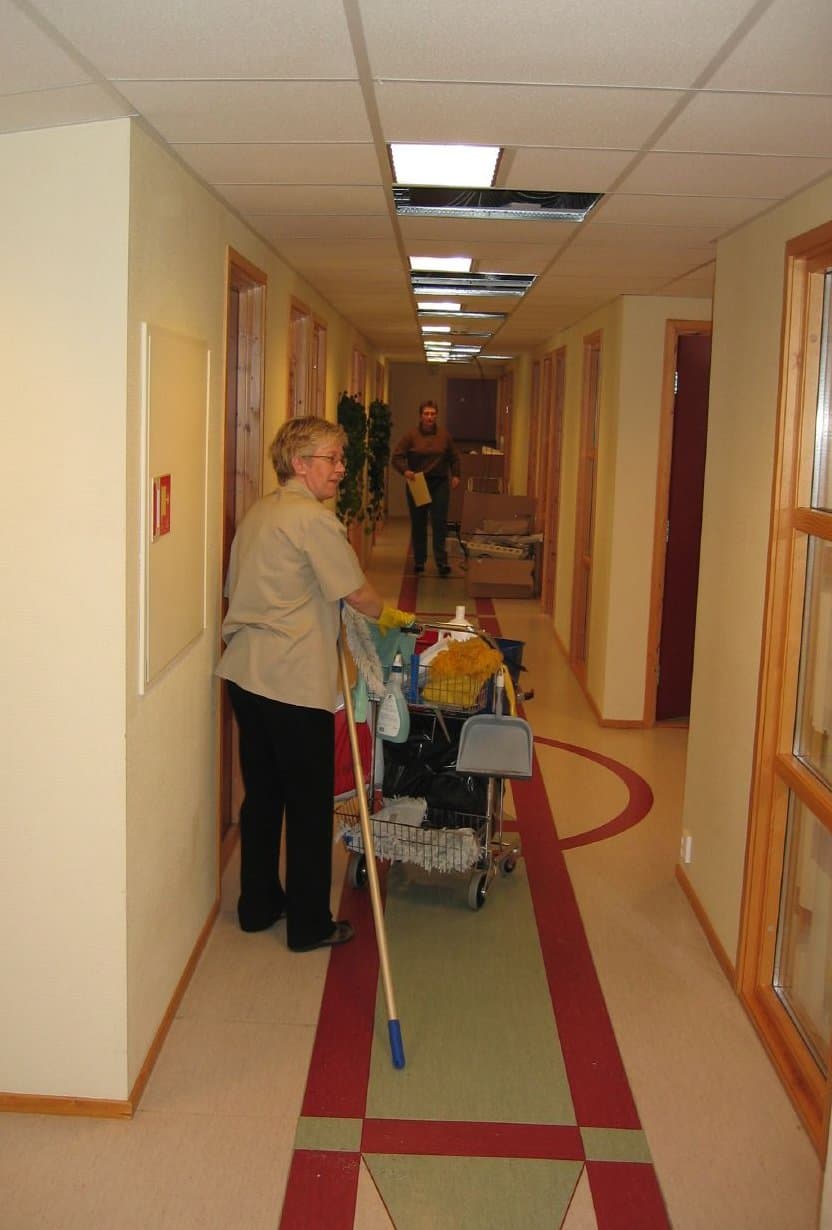
After-hours office cleaning: what a facilities manager should actually inspect
A foyer walk at 8am is not an inspection. This is a practical route through kitchens, washrooms, glass, bins, high dust, security and the conversation you should have with the night supervisor.
Claire Nguyen · 4 February 2025