Auto-scrubbers, vacuums and when to lease the fleet
Capex versus opex, battery versus cable, and the Friday-night machine that has no spare. Who owns the kit on a contract decides who waits. Filters and training are the real lease conditions.
By Priya Raman · Operations writer · 29 July 2025 · Updated 9 March 2026
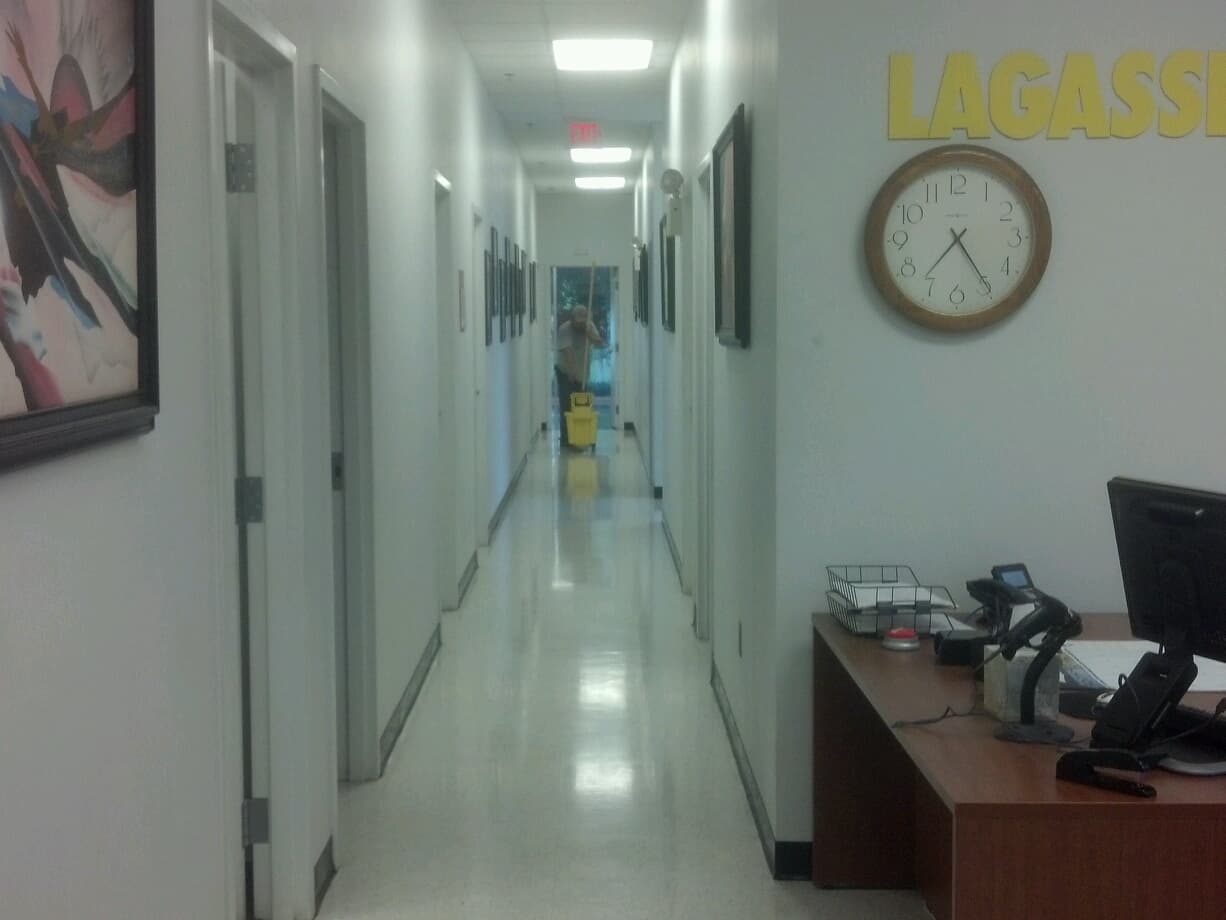
A commercial clean is still a person with a machine. The specification can talk about outcomes; the outcome on a hard floor is usually an auto-scrubber that started, picked up its water and did not leave a crescent of dirty solution under a desk. Vacuums are the same story in pile. Contracts go quiet on who owns these things, who fixes them, and what happens on the Friday night they fail. That silence is how a tenancy pays for a method it is not receiving.
This sits in the operations and people hub because plant is a labour multiplier. We do not sell machines and we do not write leases. We are here to say when buying, leasing or hiring matters, and when it is a finance conversation dressed up as a quality one.
The machine decides the method more often than the specification
Write “hard floors mopped to a dry, residue-free finish” and you have described an outcome. Whether that outcome is possible in the hours you bought depends on the floor area, the soil and the machine. A walk-behind scrubber with a working squeegee is a different method from a flat mop and a tired shoulder. A commercial vacuum with suction is a different method from a domestic upright that has not seen a bag change since the last area manager visit.
If the price assumed a machine and the site has a mop, you do not have a specification problem. You have a plant problem. Inspect the plant. Open the housing. Look at the pad, the squeegee, the hose, the filter and the spare. A gleaming cowling over a collapsed bag is an indoor-air finding as well as a floor finding.
Warehouse and industrial floor care makes this obvious because the areas are large and the soil is honest. Offices hide it, until the vinyl at the tea point is grey and the stone in the foyer is only surviving because a day porter redoes it.
Capex, opex and who is pretending the price contains a new scrubber
Buying a machine is capital. Leasing or hiring it is operating spend, with a contract attached. Neither is morally superior. The question is whether the attend contains a working machine for the term, and who carries the failure.
Contractors buy when they have a run of similar floors and a workshop. They lease when they want a service plan, a swap-out, or a balance sheet that does not hold a five-year scrubber on a three-year contract. They hire for a one-off restoration or a make-good. In-house buyers do the same sums, with a capex gate that closes in April.
What goes wrong is the bid that prices a new scrubber and delivers a veteran, or the lease that expires in month fourteen of a thirty-six-month contract. Ask what will be on site in year three. Ask who pays for the mid-term replacement. Ask whether the lease is tied to this site or to a pool that can be pulled to a louder client.
In-house teams face the mirror image. A purchased machine that sits in a cage with no trained operator is a sculpture. A lease that forbids a contractor from using the owner’s kit, while the specification assumes that kit, is a lawyer’s fight waiting for a dirty floor. In-house versus contracted cleaning is partly an asset question: if you keep the machines, you keep the downtime.
Do not specify “new equipment” as a vibe. Specify class, condition, maintenance evidence and a spare or a swap-out time. New is a birthday. Working is a result.
Battery versus cable
Battery machines have won a lot of commercial floors, for good reasons. No trailing lead through a lift lobby. Less hunting for a locked power point. Better on warehouse plates and long corridors. Quieter, sometimes, which matters if a night attend shares a building with a hotel or a ward.
They fail in predictable ways. Packs that no longer hold a shift. Chargers in a store that has two GPOs and four machines. A “hot swap” culture with no second pack. Lithium packs stored badly, or damaged and left in a cupboard. A crew that cannot say when the pack last held a full attend. Cable machines fail too — damaged leads, missing tests, a drum that becomes a trip — but they fail while they still have power from the wall.
Choose by the attend, not by the catalogue. A two-hour office floor with honest power can live with a cable vacuum if the lead is short, tested and not a trip through a dark floor. A four-hour warehouse run cannot. A mixed site may want both, which is a storage and training problem.
If you specify battery, specify a pack that lasts the attend plus a margin, a charger that is not a future argument with the base building, and a damaged-pack rule. If you specify cable, specify testing and a spare lead. Either way, specify a fallback method that is not “wait until Monday”.
Downtime, spares and the Friday-night failure
Machines fail when the building is empty and the workshop is shut. That is the design of the industry. The control is a spare, a hire arrangement that actually answers, or a method that can hold the floor for one night without pretending it is the specification.
Write the downtime rule. How many hours until a swap. Who the contractor phones. Whether a hire from a third party is acceptable. What the occupier will accept as a temporary method on a Monday after a Sunday failure. Silence is how you get a mop, a promise and three weeks of grey vinyl.
Spares on site beat slogans. A second vacuum bag, a spare squeegee, a spare lead, a spare pad driver. Filters and bags are consumables; treat them as such. A sealed HEPA claim is worthless if the seal is gone and the filter is a felt of dust. Carpet care is lost on tired vacuums more often than it is lost on the truck-mount.
Service records belong with the machine, not in a portal nobody on the night shift can open. A sticker with a date is a start. A leading hand who can show you the last pad change is better.
Who owns the fleet on a contract
Ownership decides who waits. If the contractor owns or leases the kit, they own the phone call at 10pm. If the building owns it and the contractor “may use it”, you own the downtime, the training, the consumables and the argument about the cracked squeegee. If nobody can say, the machine will be orphaned the first time it needs a part.
Write it down.
- Who supplies each class of machine.
- Who maintains it, and to what evidence.
- Who supplies pads, bags, filters and blades.
- Who may use it — named roles, not “the cleaners”.
- What happens at contract end: removal, make-good, leftover consumables.
- What happens if the occupier’s own day porter also uses the same scrubber.
A machine that is “available to the contractor” in a cage the night crew cannot open is not available. A machine the incoming contractor inherits with no history is a liability, not a gift. End-of-contract week is when fleets grow legs. If you want the scrubber to stay, say so in the handover clause, not in a corridor conversation.
Do not assume a leased machine is someone else’s WHS problem. The person conducting the business or undertaking still owes the operator a safe machine, training and a method. A hire company can keep the service plan. They cannot stand in the washroom at 11pm.
Filters, bags and the training that is the real lease condition
The unglamorous parts decide the air and the floor. Full bags, washed filters that were never replaced, housings that no longer seal, and squeegees that have hardened into a smile will make an expensive machine into a particle generator or a wet trail. Inspect them. Put a change rule in the specification.
Training is the other lease condition. A walk-behind in the hands of someone who has not been shown the flow, the pad and the dump point is a damage device. Stone, polished concrete and cheap vinyl each take a different pad and chemistry.
Induct the machine the way you induct the alarm. Show, then watch. A diagram on the handle beats a manual left in a truck. If the lease includes manufacturer training, take it, then still do the site version — this dump point, this tap, this finish.
Battery safety is training. So is not riding a machine in a lift it was not rated for, and not leaving recovery water in a tank over a long weekend.
What to write so the floor still gets done in year three
You do not need to become a fleet manager. You need a few lines that survive a change of area manager.
Name the class of machine for the main floors and for the carpet. Name battery or cable and the spare-power rule. Name who owns, who maintains, and the swap-out time. Name the consumables and the filter or bag rule. Name who is trained to use it, and forbid untrained relief from inventing a method. Name the dump point and the tap. Name what happens at handover.
Safe Work Australia’s model WHS framework still expects plant to be maintained and operators to be competent. A lease invoice is not competence. A purchase order is not a maintenance record.
If you want a test, ask to see the machine on a Thursday night, switched on, pad off, housing open. Ask when it last failed and who would come if it failed in an hour. If those answers are specific, buy-or-lease is a finance choice and the floor will probably survive it. If they are not, the fleet is a story and the specification is a mop. Write for year three, not for the demonstration in week one.
Questions readers send us
- Should a facilities manager specify that the contractor must own the machines?
- Specify the result and the uptime, not the balance sheet. Owned, leased or hired, the machine has to be on site, maintained and covered by a spare when it fails. A contractor who owns a dead scrubber is not more professional than one who leases a working one.
- Is battery always better than cable in an office?
- Battery is better where a cord is a trip, a lift is a hassle or the floor is a warehouse run. Cable is simpler where the attend is short, the power is honest and someone will replace a damaged lead. A flat pack at 10pm is not a sustainability win. It is an unfinished floor.
- Who pays when a machine ruins a floor?
- That is a contract and insurance question. The specification should say who may use which machine, on which finish, and who stops work if the pad or the chemical is wrong. A leased machine does not move the duty to the lessor if your crew chose the pad.
Continue in Operations and people

Building a relief roster that does not collapse on Monday morning
Casual pools are not a system. Award minimums decide whether a two-hour gap is fillable. Multi-site jumping and sick season take the rest. Buyers should specify relief hours, not hope.
Priya Raman · 2 September 2025

Night-shift cleaning: fatigue, safety and the quality that vanishes at 2am
Body clocks, lone work and alarms. The last floors get the leftover attention. Transport home is a WHS question. Award night penalties pay for the hour; they do not make it safe.
Priya Raman · 13 May 2025
Training commercial cleaners: induction that still works on night two
Site maps, chemicals, security and language. A buddy shift is not a course. CAF and the Award ask whether the labour is real. Refreshers have to survive a roster, not a January toolbox talk.
Priya Raman · 11 February 2025