Water use and microfibre programs that cut chemical load
Colour-coded cloths, a laundry that does not wreck the fibre, and an auto-scrubber that is not a hose on wheels. Microfibre fails on grease and grout. Drought-era building rules still decide what you may pour.
By James O'Connor · Sustainability editor · 15 April 2025 · Updated 25 February 2026
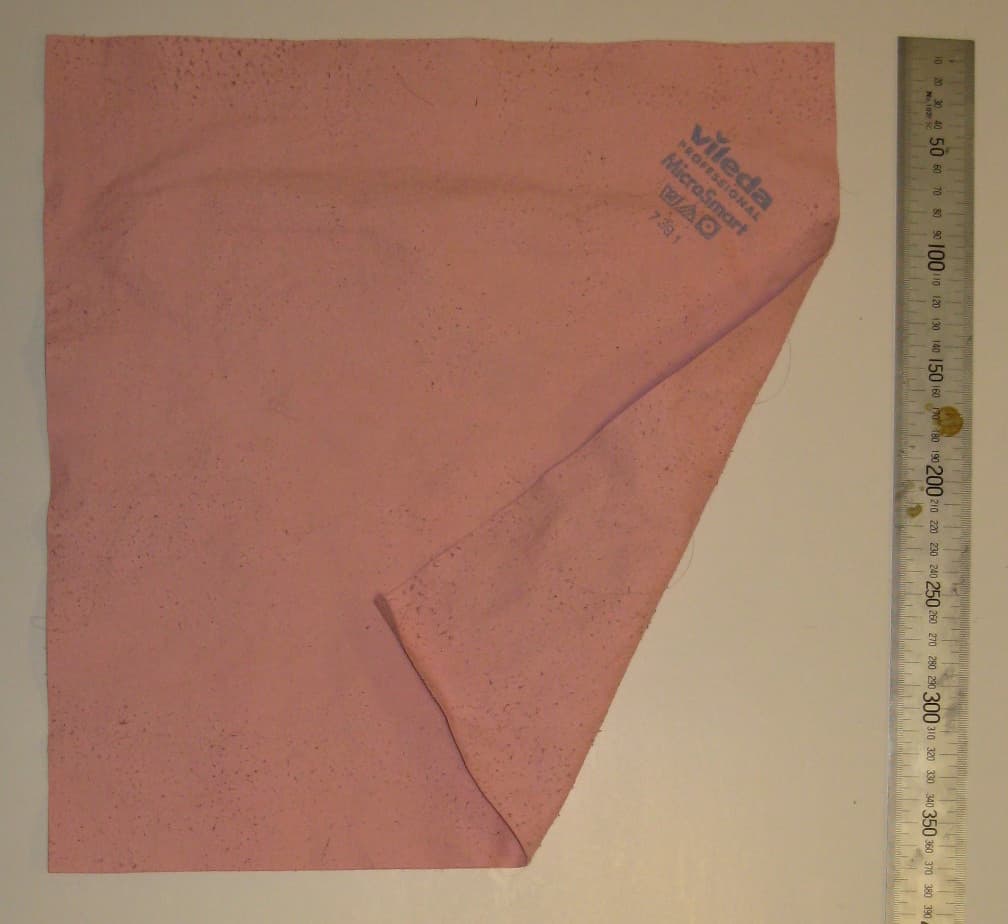
Microfibre is sold as a way to stop buying chemicals. Sometimes that is true. A well-kept cloth on a lightly soiled hard surface will lift dust and many everyday marks with water, or with a dose so small the old mop-and-bucket habit looks wasteful. The rest of the time, microfibre is a cloth that has not been washed, a colour that no longer means anything, and a chemical load that has not fallen because the degreaser is still on the trolley “for the hard bits”.
This belongs in the sustainable cleaning hub next to the labels people put in tenders. A GECA licence on a concentrate does not cut use if the method is still a wet mop and a hope. We are not selling cloths. We are here to say when a program reduces water and chemistry, and when it is a catalogue photograph.
Microfibre is a method, not a religion
The useful fact is mechanical. Split fibres increase surface area and, used damp and with pressure, hold soil instead of pushing it around. That is why a flat-mop system with enough cloths can replace a grey string mop on a large part of an office floor. It is also why a single cloth asked to do a tea point, a washroom door and the reception glass will fail all three.
A program has a cloth count, a colour rule, a change rule and a laundry. “We use microfibre” is not a program. It is a purchase order.
Water sits in the same sentence. The point of the cloth is to carry less water onto the floor and less product into the bucket. If the crew still fills a mop bucket to the brim, floods a tea-point vinyl and leaves it to dry in a building that has already dropped outdoor air, you have not cut the load. You have added a cloth. Indoor air will notice the damp; we set that out in indoor air quality and cleaning.
Colour-coding that is still visible at 11pm
Colour-coding is custom, not a statute. The usual Australian office split is some version of red or pink for washroom sanitary, yellow or another washroom colour for basins, blue for general surfaces, green for food-contact or kitchen, and a separate colour for glass if you are being careful. Buildings invent their own. That is fine. What is not fine is two charts.
Put the chart on the store wall, on the caddy and in the induction pack, with the same colours. Photograph it. If a relief cleaner cannot tell which cloth does the bowl, you do not have colour-coding. You have a drawer of blue rectangles.
Cloths need to be changed when they are loaded, not when the floor is finished. A “one cloth per room type per floor” rule is a start. A “one cloth for the run” rule is how you move the washroom onto the kitchen bench. Inspect the caddy, not the policy. If the only dry cloth at the end of the shift is the one that never left the packet, ask how many rooms were actually wiped.
Disposable wipes are not a colour-coding system. They are a waste stream with a fragrance. If you use them for a genuine high-touch or outbreak task, say so and bin them as the SDS and the waste map require. Do not let them quietly replace the cloth program because someone forgot to do the laundry.
Laundry is the program
Microfibre that is not laundered is a soil reservoir. It smells, it smears and it returns yesterday’s coffee to this morning’s meeting table. The laundry is therefore not an amenity. It is the control.
Write the process. Wash cloths and mop pads separately from ordinary linen if you can; they pick up different soil and they fail in different ways. Use a temperature and a detergent the fibre can survive. Do not use fabric softener. Softener coats the split fibre and turns an expensive cloth into a less honest cotton. Dry them. A damp bundle in a black bag over a weekend is how you meet Monday with a smell the occupier will blame on “the cleaners” and then on “the air-conditioning”.
On-site machines need a program, a who-empties-the-filter rule, and a spare set of cloths so a broken washer does not send the crew out with yesterday’s stack. Off-site laundry needs a count. Cloths leave and cloths return. A contractor who cannot tell you the count does not have a program. They have a loss.
Worn fibre should leave the program. Once the pile is flat and the cloth just pushes soil, it is a rag. Keep a reject bag. Inspect a sample the way you would inspect a vacuum filter. A handsome wall chart and a pile of bald pads is the same finding.
When microfibre fails: grease, grout and a floor that is not an office
Kitchen grease is not light soil. A canteen plate, a café spill, a tea room that fries food, and a leaking dishwasher edge will not yield to a damp blue cloth. They need a surfactant that matches the grease, contact time and a rinse. Pretending otherwise is how you polish fat into a haze and then buy a stronger solvent in a panic.
Grout is a geometry problem. A flat fibre sits on the tile. The joint stays dark. If you want grout to change colour you need agitation, a product that is allowed on that stone or ceramic, and a frequency that matches the traffic. A “microfibre only” rule written by someone who has not knelt on a washroom floor will be ignored, which is better than being obeyed.
Other honest failures: heavily oiled industrial floors, some polishes, wet paint, chewed gum, and any surface the manufacturer says must not be dry-wiped. Warehouse and industrial floor care is a different soil book. Do not export an office cloth program onto a dock and call it sustainability.
Glass can work with a dedicated cloth and a little water. It fails when the cloth has already done a bench. The smear is the evidence.
Auto-scrubbers and the water you never see
A walk-behind or ride-on scrubber is a water device. It lays solution, agitates, and — if the squeegee and vacuum are intact — picks most of it up. The tank sizes, the flow setting and the number of dumps decide whether you have used a bucket or a small flood.
Specify the machine as plant: working vacuum, a squeegee that still meets the floor, a flow the operator can turn down, and a place to fill and dump that is not a stormwater pit. Recovery water is dirty water. It belongs in the soil drain the building has named, not in a garden bed and not down a cleaners’ sink that then feeds a grease problem.
Recycle or metering systems exist. Use them if the building’s water target is real and the machine is maintained. A recycle unit full of black water that is never changed is a smear generator. So is a five-minute dock wash with a trigger left tied open. That hose will erase a month of careful tank settings.
Over-wetting is still a slip and an air problem. If the squeegee is worn, the machine is a hose on wheels. Inspect the trail, not the brochure.
Drought-era rules that never quite left the building
Australian commercial buildings carry water memories. Restrictions, NABERS Water conversations, council wash-down rules and base-building procedures written in a dry year stay in the folder after the dams recover. A wet autumn in Melbourne or a good season in Perth does not automatically license a hose on the podium.
Read the building’s rules before you write a method. Some docks may not be washed to drain. Some plant rooms are not on the cleaning contract at all. External glass, entry stone and car-park wash-down are where contracts quietly become water users. If that work is in scope, name the source, the drain and the ban.
WELS ratings on a store tap will not save a contract that fills tanks from a fire hose. Look at the tap the crew actually uses.
Bucket changes sit in the same ledger. Changing dirty water is hygiene. Changing it because nobody was given a second bucket and a wringer that works is waste. Flat-mop systems with enough pads cut both problems at once — less water, less soup walked down a corridor.
What to specify so the load actually falls
You want fewer litres and fewer grams of product per attend, without inventing a method that cannot clean a canteen. Write it so a leading hand can brief it.
- Colour chart, cloth counts per floor, and a change rule.
- A laundry process, a reject rule, and a spare stock so a broken washer is not the method.
- Surfaces where water-only or lightly dosed microfibre is the default.
- Surfaces that still need a named product: grease, grout, specified disinfecting tasks, scale.
- Auto-scrubber flow, dump point, squeegee condition, and a ban on dock hosing unless the building allows it.
- Drying expectations for occupied paths, coordinated with after-hours plant.
- The building’s water rules, copied into the specification so they are not an oral tradition.
Safe Work Australia’s model WHS duties still apply to wet floors, chemicals and manual handling of wet laundry bags. A green cloth program is not a reason to skip a wet-floor sign or to carry a fifty-litre drum up a stair because the lift is on access control.
If you want a test, do not weigh unused drums and declare victory. Walk the caddy at the end of a Tuesday night. Count the cloths. Smell the bag. Look at the grout, the grill tray, the trail behind the scrubber and the stormwater grate. If those are honest, the chemical load has somewhere to fall. If they are not, you have bought fibre and kept the old method. A program is a laundry, a colour, a dump point and a sentence about grease. It is not a catalogue page.
Questions readers send us
- Can microfibre replace detergent on every surface?
- No. It reduces how much chemistry you need on light soil and many hard surfaces. Kitchen grease, some washroom scale and grout still need a product that matches the soil. A dry cloth on a greasy grill tray is not a green method. It is a smear.
- Do we need a commercial laundry for the cloths?
- You need a laundry process that actually cleans them, dries them and does not feed them fabric softener. That can be an on-site machine with a written program, or a contractor laundry. A sink, a squeeze and a radiator is how you spread yesterday’s tea point across this morning’s glass.
- Are drought rules still a live issue in a wet year?
- Often yes. Buildings keep wash-down bans, meter targets and dock rules written in a drier decade. A wet quarter does not rewrite the base-building procedure. Read the building’s water rules before you specify a hose.
Continue in Sustainable cleaning
The waste a cleaning contract quietly produces
Liners, drums, spent pads and the difference between tenant rubbish and cleaner rubbish. Landfill versus comingled is a bay problem. Weighbridge theatre is a reporting problem.
James O'Connor · 19 August 2025
Green cleaning certifications in Australia: which labels survive a tender
GECA is a product ecolabel. ISO 14001 is a management system. A tender that treats them as the same thing will buy a certificate and a trolley that do not match.
James O'Connor · 21 January 2025